Use Cases
Empowering Product Teams, Marketplaces, and Enterprises with Reliable, Rule-Driven Workflows
Onboarding & Applications
From first submission to final decision.
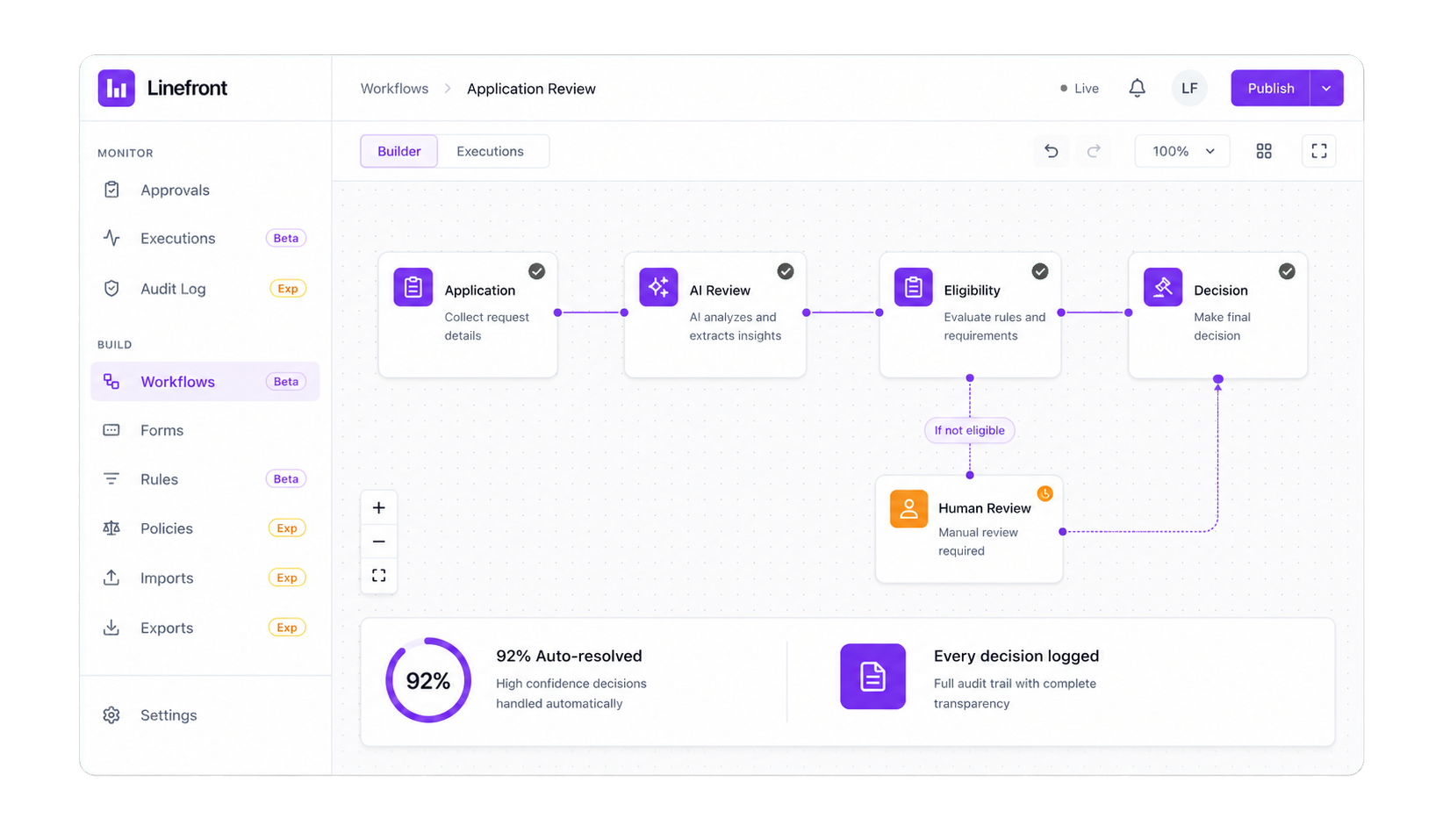
Onboarding and application workflows often involve multiple steps that are loosely connected: collecting information, checking eligibility, verifying details, and issuing decisions. When these steps live in separate tools or processes, teams are forced into manual coordination, follow-ups, and subjective review.
Linefront brings onboarding and applications into a single, structured flow. Forms adapt based on responses, rules evaluate eligibility in real time, verification steps are triggered only when required, and outcomes are produced automatically — giving applicants clarity and teams consistent, explainable decisions.
Approvals & Requests
Internal or external workflows that need structure and traceability.
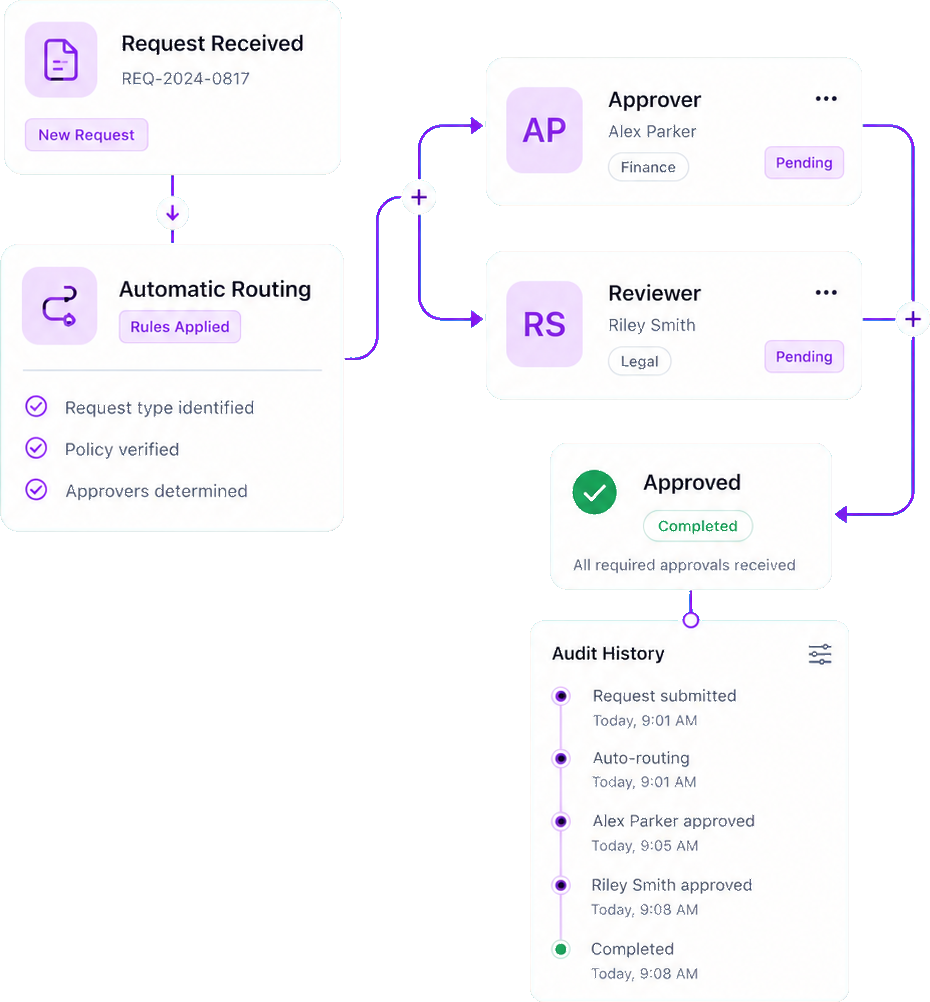
Approvals and requests are everywhere — from internal permissions and procurement to external reviews and exceptions. Too often, these workflows rely on email threads, shared documents, or informal hand-offs that make it hard to see who approved what, and why.
Linefront replaces ad-hoc approval processes with clear, rule-driven workflows. Requests are routed automatically, approvals follow defined paths, and every action is logged. This creates faster decisions, clearer accountability, and a complete record that teams can rely on.
Compliance-Heavy Submissions
Processes where rules, evidence, and auditability matter.
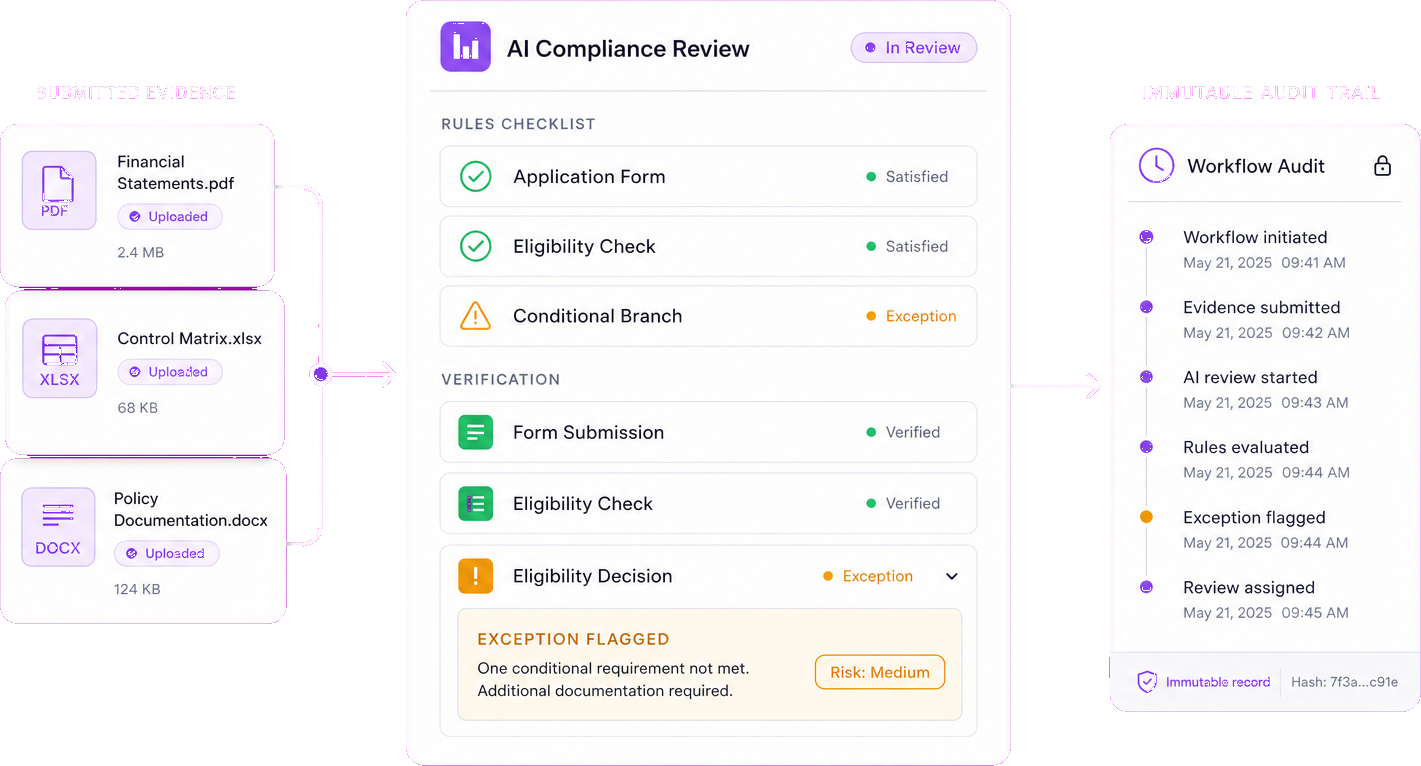
In compliance-sensitive workflows, decisions must be consistent, defensible, and well-documented. Manual review increases risk by introducing inconsistency and making it difficult to prove that policies were applied correctly.
Linefront embeds rules, evidence requirements, and verification directly into the workflow. Submissions are evaluated against defined criteria, documentation is requested only when necessary, and every step is recorded automatically — supporting audits, reviews, and regulatory scrutiny without slowing operations.
Fair Allocation & Access
Rule-driven selection, lotteries, or prioritisation.
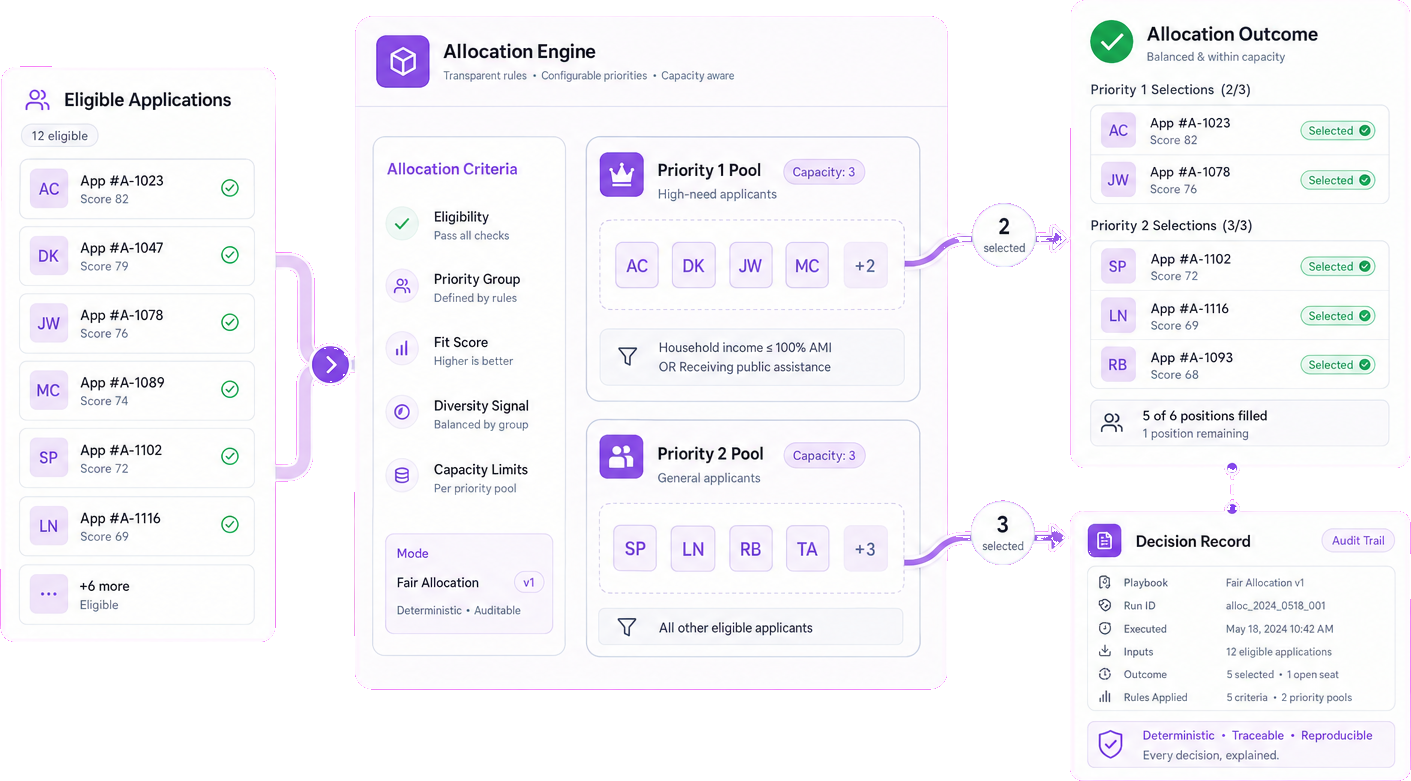
When demand exceeds supply, organisations need to allocate access in a way that is fair, transparent, and easy to explain. Manual selection processes often lead to disputes, unclear outcomes, or perceptions of bias.
Linefront supports fair allocation by combining eligibility screening, prioritisation rules, and explainable selection logic. Whether outcomes are determined by rules, weighted criteria, or lotteries, every decision can be traced back to defined inputs — ensuring fairness at scale and confidence in the process.
Capabilities
Everything Built Into the Workflow — Forms, Decisions, Verification, and Audit
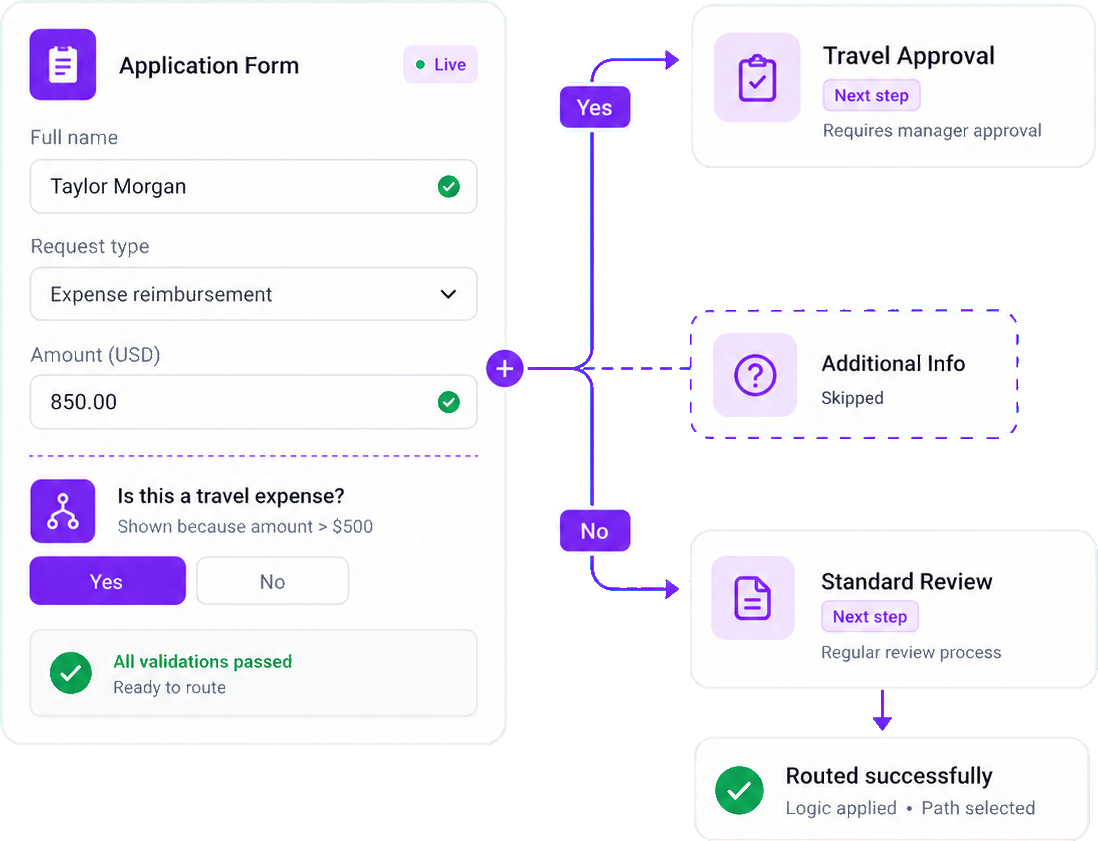
Smart Forms & Logic
Create dynamic forms with branching logic, validation, and routing.
Traditional forms treat every user the same, collecting too much information upfront and pushing complexity downstream into manual review. Linefront's smart forms adapt in real time, changing questions, requirements, and paths based on user input and predefined rules.
By combining branching logic, validation, and routing in one place, teams can design forms that ask only what's necessary and send submissions exactly where they need to go. The result is higher completion rates, better data quality, and workflows that move forward automatically instead of stalling after submission.
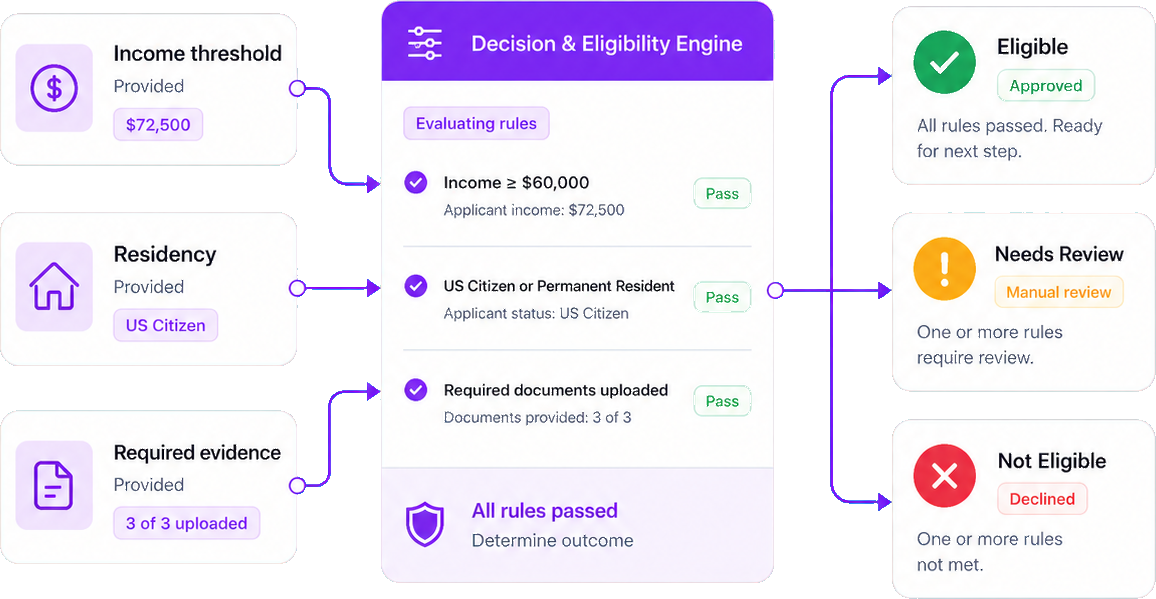
Decision & Eligibility Engine
Apply rules to determine outcomes automatically — approvals, rejections, next steps.
Most organisations still rely on spreadsheets, documents, or individual judgement to decide who qualifies for what. Linefront replaces this with a built-in decision engine that applies eligibility rules consistently to every submission.
Rules can be simple or complex — thresholds, combinations, priorities, or conditional outcomes — and are evaluated automatically as part of the workflow. Decisions are made instantly where possible, with clear logic behind every outcome, reducing delays while ensuring fairness and consistency.
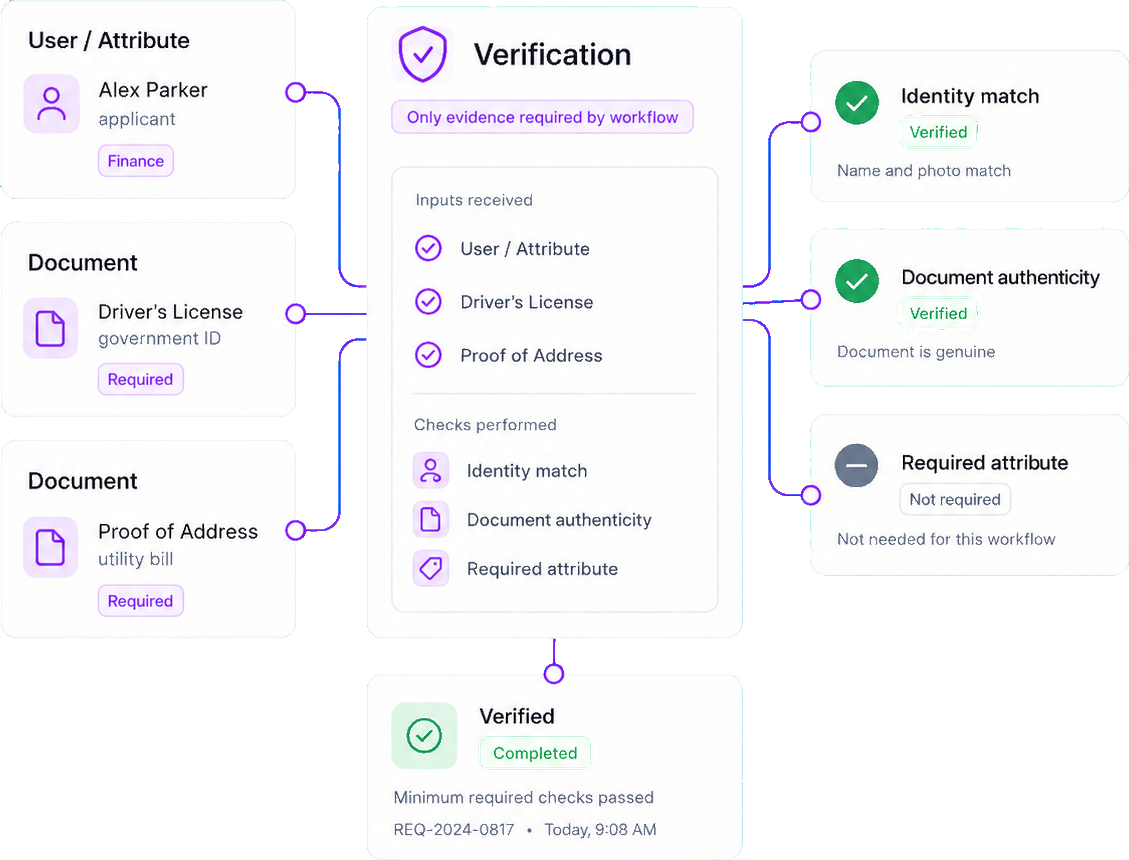
Verification & Trust
Verify users, documents, or attributes without over-collecting data.
Verification is often treated as a separate step that adds friction and increases data risk. Linefront integrates verification directly into workflows, triggering checks only when they're actually required by the rules.
This approach allows teams to establish trust without collecting unnecessary information. Documents, attributes, or user details are requested conditionally, helping organisations balance compliance, privacy, and user experience while keeping workflows moving.
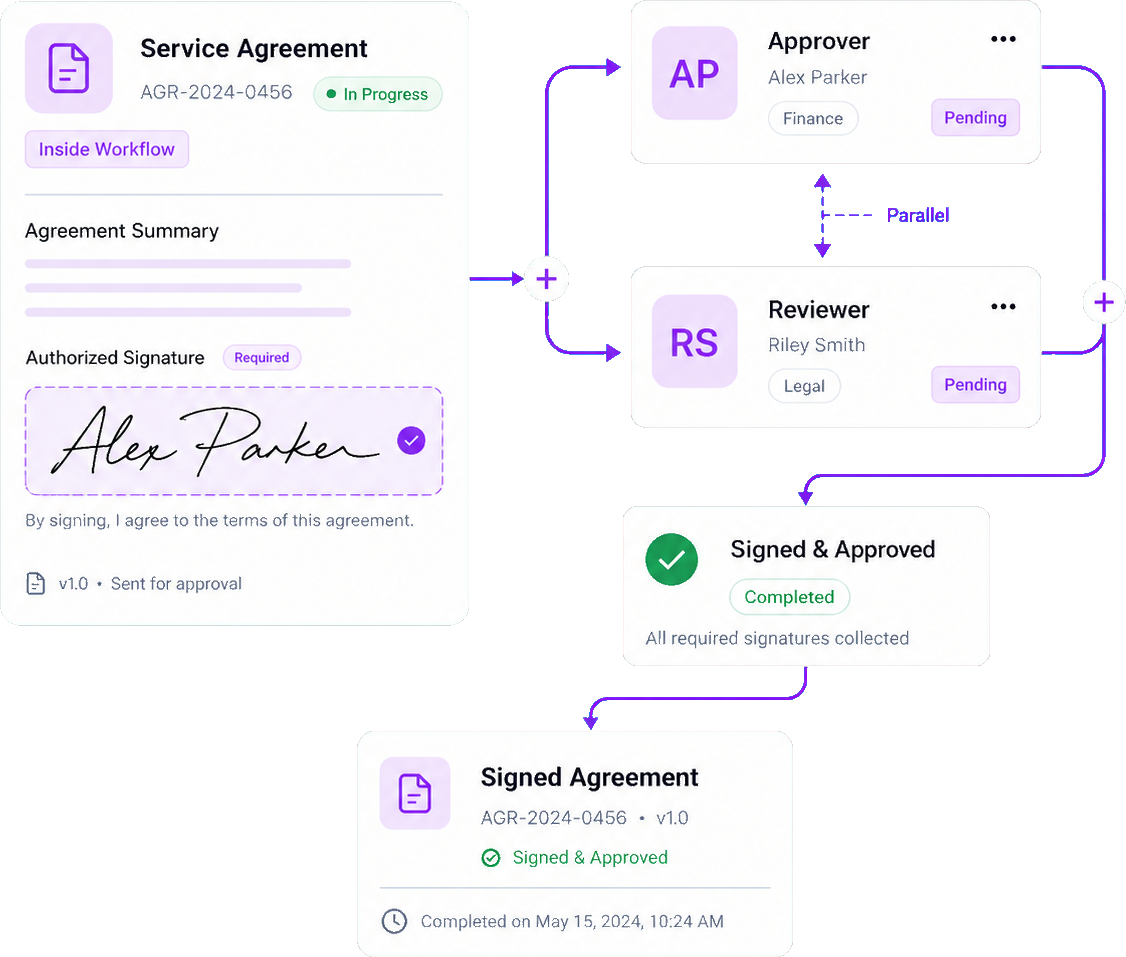
E-Signatures & Approvals
Legally binding signatures embedded directly in workflows.
Approvals and signatures are a critical part of many workflows, yet they're often handled through disconnected tools and manual handoffs. Linefront embeds legally binding e-signatures and approval steps directly into the workflow itself.
Whether approvals are sequential or parallel, internal or external, every signature is captured in context and recorded automatically. This keeps decisions, consent, and records in one place — reducing friction and eliminating gaps in accountability.
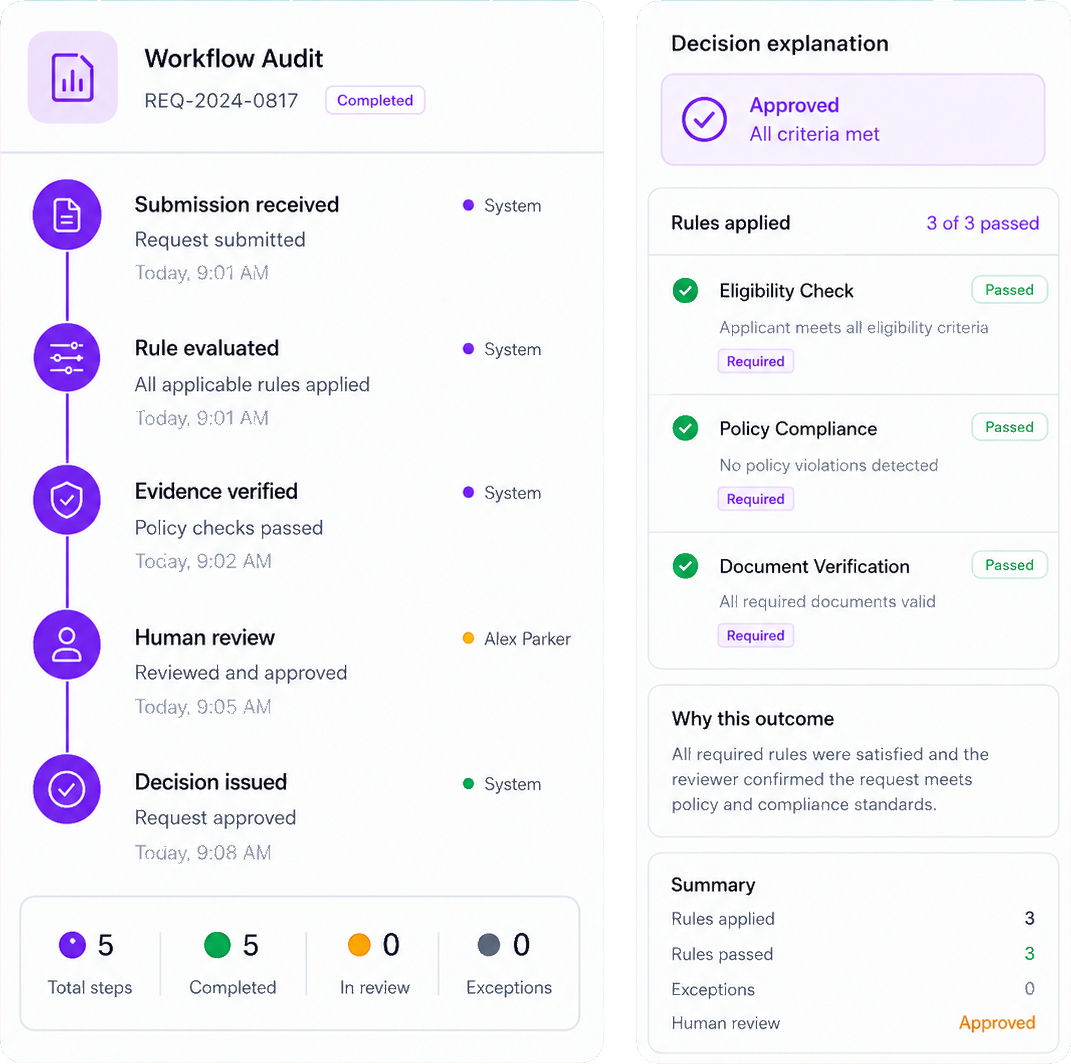
Audit & Visibility
Every action logged, timestamped, and explainable.
When workflows involve decisions, organisations need to understand not just what happened, but why. Linefront provides full visibility into every step of a workflow, from submission through decision and approval.
Each action is logged and timestamped automatically, creating an end-to-end audit trail. Teams can review how outcomes were reached, which rules were applied, and who took action — supporting audits, reviews, and continuous improvement without extra work.
Integrations & API
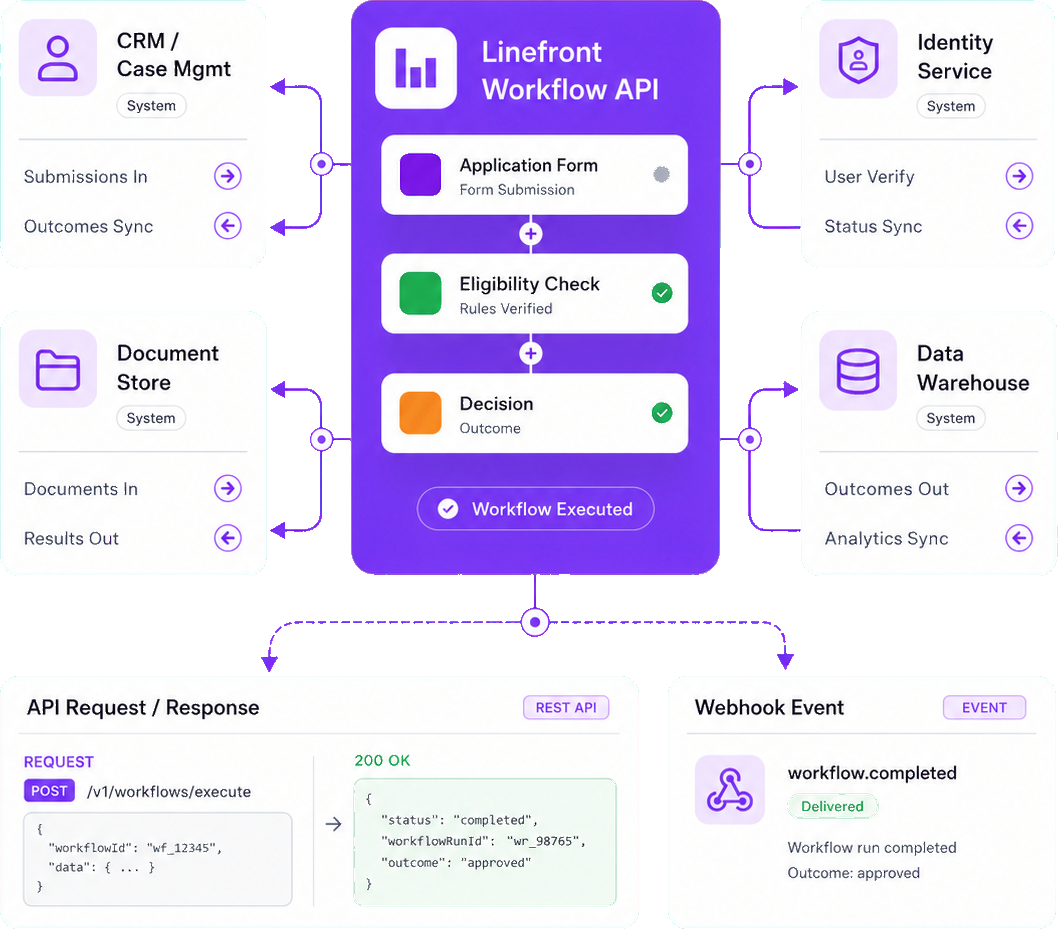
Connect Linefront to your existing systems or embed it directly.
Linefront is designed to fit into existing stacks, not replace them. Its API-first architecture allows teams to integrate workflows with internal systems, third-party platforms, or customer-facing applications.
Whether embedding forms, syncing outcomes, or triggering downstream actions, Linefront acts as a decisioning layer that connects cleanly with the rest of your infrastructure. This makes it possible to automate complex processes without rebuilding systems or introducing brittle integrations.
From Review to Resolution
Move from manual review to
confident outcomes
